
Choosing the Right Cake Board Size and Thickness
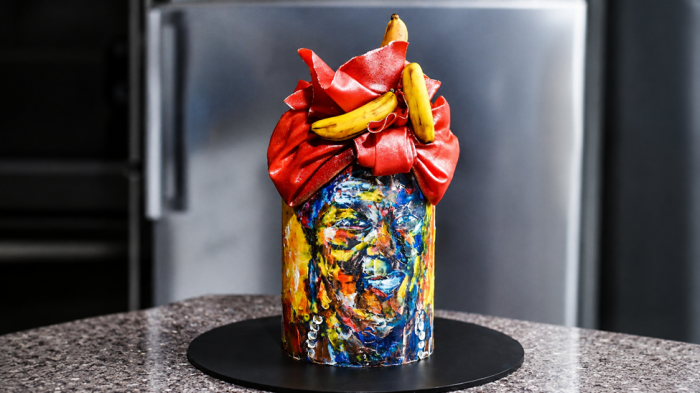
You spend hours baking and decorating a wonderful cake. Then the cake tilts on its board. Or the thin cardboard base bends as you try to carry it. Or even worse, it sags under the weight and the whole thing shifts before you reach the table. Is that a familiar situation? Or worse: has it happened to you once?
Choosing the wrong cake boards is a simple and common mistake bakers of all levels make. And what’s the point of a perfect cake if the base fails at the last moment? The good news is that learning the basics of size and thickness and shape, you will not make this mistake again. Cake boards come in various sizes and shapes, and selecting the right one really changes how stable and professional your finished cake appears.
Why Do So Many Bakers Pick the Wrong Board?
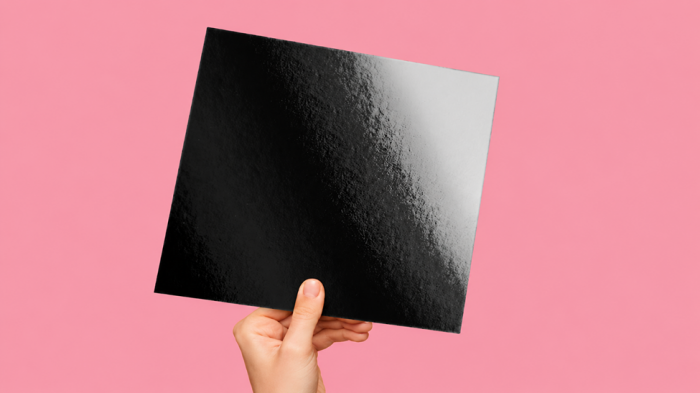
The majority of bakers, including those who have recently joined the profession, rarely pay attention to the selection of cake boards.
The cake is finished, so they take whatever is nearby, usually a leftover thin card from a previous bake and wonder later why it did not hold up. It should be noted that the choice of a board influences many aspects of the final product, from transportation to the stability of decoration and overall professionalism of the presentation.
While a thin cake cardboard base may work great for light sponge cakes, it simply won’t be able to withstand the weight of heavy fruit cake or multi-layer celebration cakes. One wrong board choice can make the entire cake feel at risk! Selection of a proper board for a specific cake is one of the most straightforward steps to improve your work.
Are Cake Boards and Cake Drums Really the Same Thing?
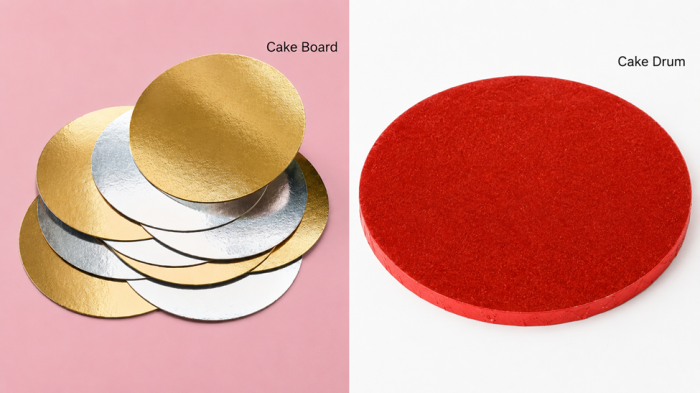
Cake board or cake drum: sounds similar, right? But the difference can make or break your cake! Because this is another common confusion among bakers regarding cake board vs cake drum difference.
Normally cake boards refer to relatively thin pieces of cardboard or grease-resistant sheet, 3 to 5 millimeters in depth. Cake drums are quite thick and strong, generally 10 to 12 mm thick, often foil wrapped for premium finish. Both have specific roles; using them incorrectly will certainly lead to some problems.
Here is the difference so that you can know how to make the correct decision every time:
| Feature | Cake Board | Cake Drum |
| Thickness | 3 mm to 5 mm | 10 mm to 12 mm |
| Best use | Light sponge and single-tier cakes | Heavy, tiered or fruit cakes |
| Presentation | Simple and functional | Premium, professional look |
| Foil covered? | Rarely | Usually yes |
| Good for transport? | Short distances only | Yes, ideal for delivery |
| Price | Budget friendly | Slightly higher |
Light cake? Simple board works. Heavy cake? Why take the risk, just go for a drum!
How Thick Should a Cake Board Be?
Thickness is just as important as size. It depends on the weight and structure of your cake. Here is a simple breakdown:
- 3 mm thin boards are best for light sponge cakes, cupcakes, and for use inside tiered cake.
- 5 mm medium boards are suitable for single-layer birthday cakes with buttercream or fondant and medium decoration.
- 10 to 12 mm drum boards are used for heavy fruit cakes, dense celebration cakes, and cakes that need to be transported.
- MDF or masonite boards are the strongest options and are used by professionals for large tiered wedding cakes and display cakes that need full support.
If you are ever unsure, choose the thicker option. Because a thick board never fails you but a thin one definitely can!
Cake Board Size Chart for Bakers
Want your cake to actually look professional, not homemade? This one rule changes everything that is at least 2 inches larger than the diameter of your cake. This gives you a stable border to work with, enough room to decorate the edge, and a comfortable surface to hold when moving the cake.
Let’s discuss some of the practical cake board size chart for bakers covering the most common cake sizes:
| Cake Size | Board Size to Use | Recommended Thickness | Ideal For |
| 3 to 6 inch | 5 to 8 inch | 3 mm thin board | Mini cakes, small sponges, cupcake towers |
| 7 to 8 inch | 9 to 10 inch | 5 mm slim board | Single-tier birthday cakes |
| 9 to 11 inch | 11 to 13 inch | 5 to 10 mm drum | Standard to large celebration cakes |
| 12 to 14 inch | 14 to 16 inch | 12 mm drum | Large party, fruit, and tiered base cakes |
| 15 to 18 inch | 17 to 20 inch | 12 mm MDF drum | Wedding tiers and large event cakes |
| 20 to 22 inch | 22 to 24 inch | 12 mm MDF drum | Showpiece and professional display cakes |
For square cakes, measure from corner to corner and still aim for 2 inches of board visible around the base. For shaped cakes like hearts or hexagons, use the widest point of the cake as your guide and add 2 to 3 inches.
Matching the board size properly to the cake makes decorating much easier and gives the whole presentation a cleaner, more considered finish.
What Types of Cake Boards Should You Know About
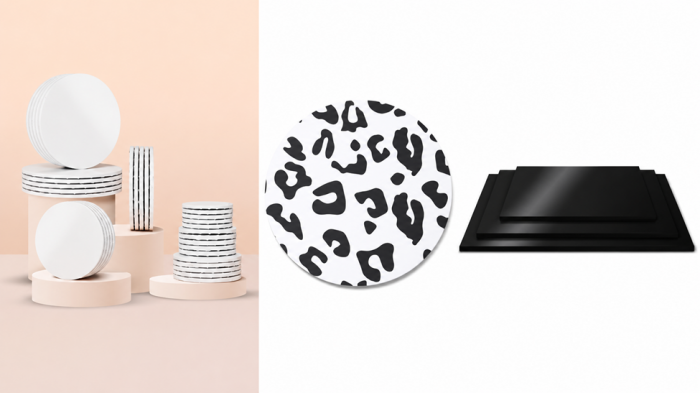
Think all boards are the same? That is exactly where most bakers go wrong!
If you browse through a good range of cake decorating supplies, you will see that boards come in a variety of different styles.
- Round cake boards are the most common and come in sizes from 4 inch to 18 inch or more, making them perfect for most standard cakes.
- Square and rectangular boards match the shape of square cakes and give a clean, flat surface that round boards cannot provide.
- Foil-covered drum boards have a premium finish and are often used for gift cakes, wedding cakes, and professional orders where the base is visible.
- Grease-resistant thin boards are lightweight and mainly used inside tiered cakes, where each layer sits on its own support.
MDF and masonite boards are strong and heavy, making them ideal for large cakes and display cakes where no bending is allowed.
Does the Shape of Your Cake Change Which Board You Need?
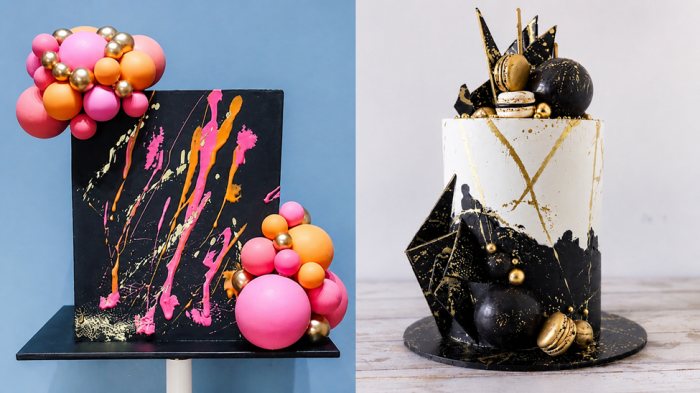
Yes, and this is something many bakers overlook. Round cakes are the most straightforward to match because round boards come in standard sizes that align neatly with common tin sizes. But if you are baking a square, heart-shaped, hexagonal, or novelty cake, you need to think a bit more carefully about your board choice.
For shaped or novelty cakes, the board needs to be large enough to support the full footprint of the cake, including any decorations that hang over the edges. It also needs to be thick enough to handle weight that may not be evenly distributed across an unusual shape. When in doubt, use a drum-thickness board and cut it to shape if needed, or choose a slightly oversized board and cover the visible edge with ribbon or icing to give it a neat, polished border.
This is where the quality of your boards and boxes really shows. A well-made board holds its shape even under irregular weight, while a cheaper option may bow, crack, or soften when it gets damp. Investing in good boards is always worth it, especially when the presentation of your finished cake matters.
Simple Tips for Getting the Best From Your Cake Boards
Once you have chosen the right board, a few small habits make a big difference to the finished result:
- Always drop a little royal icing or edible glue into the center of the board then put your cake. This prevents its slipping during decorating or transportation.
- When transporting a cake, put the board in a tight well-fitted cake box to avoid any movement during the transportation.
- Complete the exposed edge of a drum board using a corresponding ribbon using a non-toxic glue stick to make a clean and professional appearance.
- When you are covering a board with sugarpaste or fondant, brush it a little with water or edible glue to ensure the paste adheres without waving up.
Getting Your Cake Boards Right Every Single Time
A cake board is not a piece of cardboard that you place your cake on. It keeps your work safe, presentation becomes more organized, and you feel more confident to transport and handle your bake without worrying.
The rule is simple for choosing the right cake board whether you are a home baker assembling a simple birthday sponge cake or you are assembling a multi-tiered celebration centerpiece: you need to use a board that is at least 2 inches bigger than your cake.
Match it to the thickness of your bake in terms of weight. Use a drum if the cake is too heavy, tiered or has to travel any distance. And consider the shape of your cake when picking the base that goes under it.
Whether you are just a beginner or you have been baking for years, it is always worth taking a moment to choose and pick out the right base before you start. Always look through the complete range of cake boards and select it on the basis of size, shape or thicknesses that you want.
Comments are closed here.