
Common Baking Challenges Every Baker Experiences
You mix the batter, pour it into the tin, and wait to see how it turns out.
Then you open the oven and something is not right.
Instead of the result you expected, the cake sinks, the fondant cracks, or the buttercream becomes difficult to work with. It can be frustrating, especially after spending so much time getting everything ready.
Has something like this happened to you?
The truth is, these baking challenges happen to almost everyone. Most baking mistakes are not caused by one big error. They usually come from little things like using the wrong ingredients, choosing the wrong baking tools and equipment, or missing a small step without realizing it.
Once you know what to look for, many of these problems become much easier to avoid.
Buying the Wrong Products Online
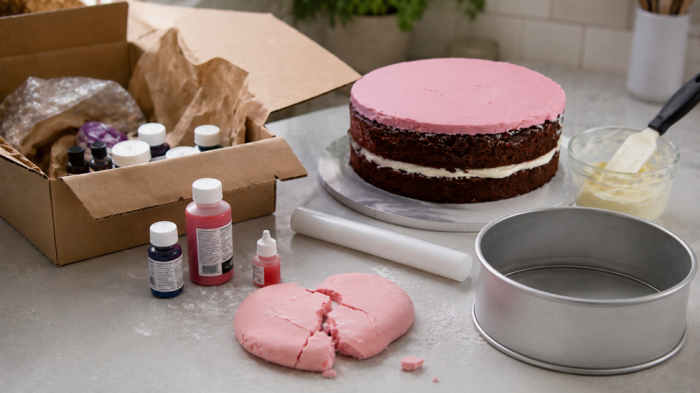
You are excited to start decorating, so you open the parcel that has just arrived. Everything looks right until you begin using it.
The colour does not mix the way you expected. The fondant keeps cracking. The cake tin is smaller than you thought. Suddenly, you are dealing with baking challenges before the oven has even been switched on.
Sometimes the problem is not your technique. It starts with buying the wrong baking supplies or ordering from a supplier that does not provide clear product information or reliable quality. A small mistake at this stage can affect the whole bake.
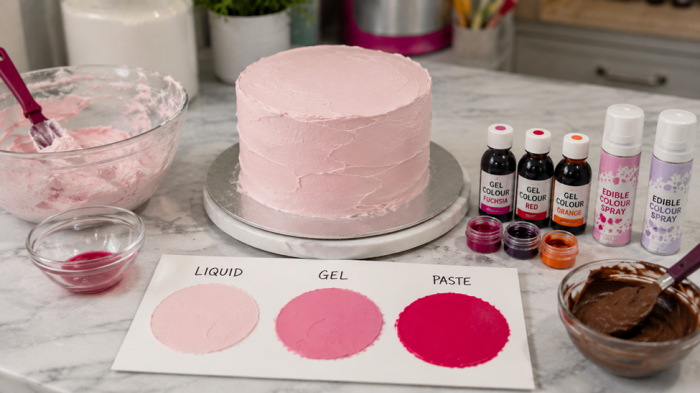
For example, liquid food colouring is not the right choice for buttercream or fondant because it adds extra moisture. Gel or oil-based colours work much better. The same goes for sugarpaste. If you need to model figures or flowers, modelling paste is the better option. Reading product descriptions carefully can save a lot of trial and error. Looking to create softer colour effects? Airbrushing is another option you can explore.
The Cake Sinks or the Buttercream Won’t Cooperate
The timer goes off, you open the oven, and the cake looks just right.
You leave it on the counter for a few minutes then the middle slowly starts sinking. Before you even get to decorating, the bake has changed.
This usually comes down to two small things: checking the cake too early or adding a little extra baking powder. The sponge rises faster than it can support itself, then drops as it cools. Two simple habits help here: measure your ingredients carefully and avoid opening the oven too soon.
Then it is time for the buttercream, and another problem can appear. If your buttercream consistency feels grainy, the icing sugar may not have been sifted. If it splits, the butter is often still too cold. Let it warm to room temperature first, and use gel colouring instead of liquid to keep the texture smooth.
Fondant Cracks When Applied

You place the fondant over the cake and begin smoothing it down. Then a crack appears across the surface, and suddenly you are trying to fix it instead of decorating.
Many baking challenges like this start before the fondant even touches the cake. Not all sugarpaste is made for the same purpose. Some work better for covering cakes, while others are made for modelling figures or sugar flowers. Picking the wrong one can lead to cracks, no matter how carefully you work.
Keep any fondant you are not using wrapped up so it does not dry out. A cool room also helps, and rolling it to around 4 to 5mm gives you enough thickness to cover the cake without tearing.
A cake stencil is one of those cake decorating tools that can help cover small marks while adding a decorative pattern at the same time.
Decoration Does Not Match the Inspiration
You spend time decorating the cake because you already have a picture in your mind of how it should look.
Then you finish, take a step back, and it just does not look the same.
It is easy to think you need more practice, but that is not always the reason. Many baking challenges start because you are trying to create small flowers, figures, or detailed decorations without the right tools.
Instead of shaping every piece by hand, cake moulds do most of the hard work for you. They help you create neat flowers, characters, and decorative pieces that look the same every time, and they save you a lot of time along the way.
Sometimes it is not your skills that need changing. It is simply having the right cake decorating tools beside you before you start.
Colours Look Washed Out
You mix the colour, frost the cake, and wait for that bold finish… but the colour looks much lighter than you hoped.
In most cases, it comes down to the type of colouring you are using rather than the recipe itself. Liquid food colouring can thin buttercream and fondant while still giving pale results. Paste or gel colours are usually a better choice because they add stronger colour without changing the texture.
Chocolate needs a different approach too. Water-based colours can cause it to seize, so oil-based colouring is the safer option.
If you want soft blends or ombre effects, edible colour sprays are worth trying. They give you a smoother finish that is difficult to create by mixing colours into buttercream by hand. Small changes like these can help you avoid common baking mistakes and give your cakes a more polished finish.
Cake Sticks to the Tin
Your cake is baked, the kitchen smells great, and it is finally time to take it out of the tin.
You turn it over, nothing happens.
A few more taps, and only part of the cake comes out while the rest stays behind. It is frustrating because everything looked fine until that moment.
This is one of those baking challenges that is easy to avoid. Before adding the batter, grease the tin and line the base with baking parchment, even if it is non-stick. Let the cake cool in the tin for around 10 minutes before tipping it out. Giving it a little time to cool helps the sponge hold together instead of breaking apart.
Piping Looks Inconsistent
The first swirl looks good. The next one is slightly bigger, and by the time you reach the other side of the cake, the border no longer matches.
This is one of those common baking mistakes that has very little to do with your piping skills.
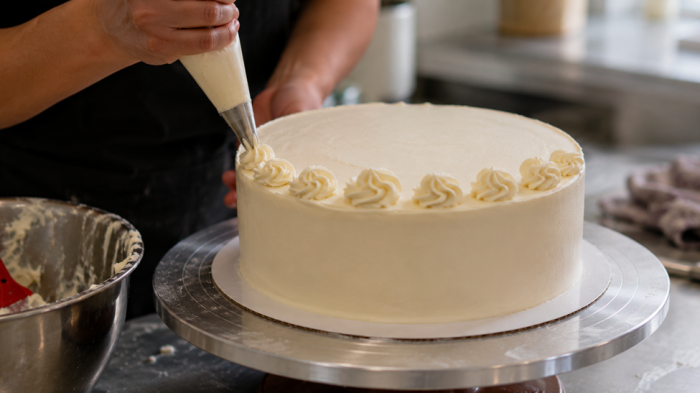
If the cake stays still while you move around it, keeping the same pressure becomes much harder. A turntable lets you rotate the cake instead, making it easier to pipe smoother borders and patterns.
Another thing to check is your buttercream consistency. If it feels too soft, the design will not hold its shape. Chilling the frosted cake for 15 minutes before piping gives the buttercream time to firm up and helps your decorations stay in place.
Using the Wrong Cake Supplies
Sometimes the recipe is not the problem. The cake supplies you use can change the result before you even start decorating.
A cake topper that loses colour, decorations that will not stay in place, or the wrong product for the job can quickly spoil the finish. Choosing good quality edible cake decorationsand using products made for the technique you are trying makes baking much less frustrating.
Many baking mistakes come from small choices like these rather than a lack of skill. One of the simplest baking tips is to check that you have the right products before you begin. It saves time, effort, and disappointment later.
Comments are closed here.