
How to Achieve a Smooth Cake Finish with Fondant (Sugarpaste)?
Have you ever noticed that a cake covered in fondant looks amazing?
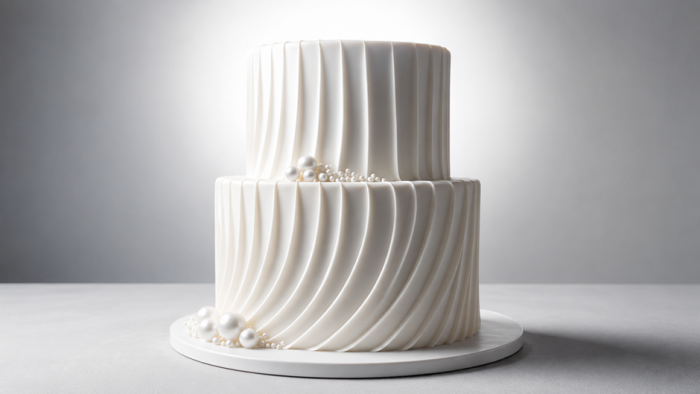
It is because fondant gives an absolutely beautiful effect. The cake covered with fondant has a smooth surface, a flat edge and looks very shiny. There is nothing that can create this effect by chance; it requires that you know exactly what you are doing.
Most people think it takes years of practice to get that kind of result. It does not. All it takes is the right steps, some patience, and a good quality sugarpaste & rolled icings to start off. Get those right and the others come naturally.
Is Sugarpaste the Same as Fondant?
This one confuses a lot of bakers, so let us clear it up. Yes, they are literally the same exact thing. The name changes depending on who you ask, but the product is identical.
Both are made from sugar, glucose and glycerine. Both roll out smooth, drape over a cake cleanly, and set to that polished matte finish. So, if a recipe says fondant and your packet says sugarpaste, do not worry. Just know that you are working on the same thing. Therefore, if some ask you, is sugarpaste the same as fondant? Just Say, yes.
Why Fondant Works So Well for Cake Decorating?
Ever wondered why so many bakers reach for fondant over everything else? It comes down to what it can do that other icings simply cannot.
Fondant gives a smooth, matte finish that buttercream cannot replicate. It does not melt, it does not sag, and it holds its shape beautifully whether you are making a simple birthday cake or a multi-tiered wedding showpiece.
But that is not all it does. Fondant is also extremely versatile. Besides being an ideal cake covering, fondant icing can be used to create a variety of toppers or cut-outs, as well as simple figures and hand-painted designs. Because of this versatility, fondant cake decorating has become very popular among amateur bakers as well as professional bakers.
Preparing Your Cake before Applying Fondant
Want to know the secret to achieving a perfect finish using fondant?
It is not about the fondant itself. It is about what you do before you put the fondant on.
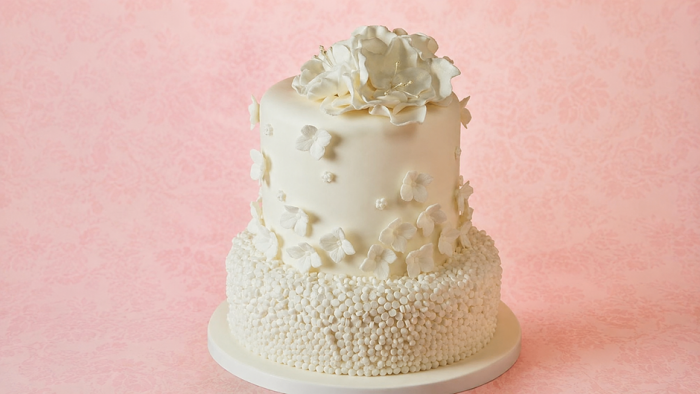
To begin with, make sure the cake is level, chilled, and has received a crumb coating of either buttercream or ganache on all surfaces so that any loose crumbs will be sealed in. Smooth it as evenly as you can, then chill again until firm. You want the surface to be slightly tacky when you lay the fondant over it, not slippery. That tackiness is what helps everything grip and stay in place.
Do not rush through this stage of preparation. A solid base makes everything else so much easier.
The Right Tools Make Fondant Decorating Easier
Having fondant decorating tools really helps to bring change in the overall result. You don’t need a huge kit but only a few important ones can really have a good impact.
- A non-stick rolling pin
- A flat-edge smoother or scraper
- A sharp knife for trimming
A smoother is especially important for getting an edge and streak-free finish. Without one, you’re just guessing. If you have these right sugarcraft essentials and the whole process becomes far more enjoyable.
How to Roll, Drape and Smooth Fondant?
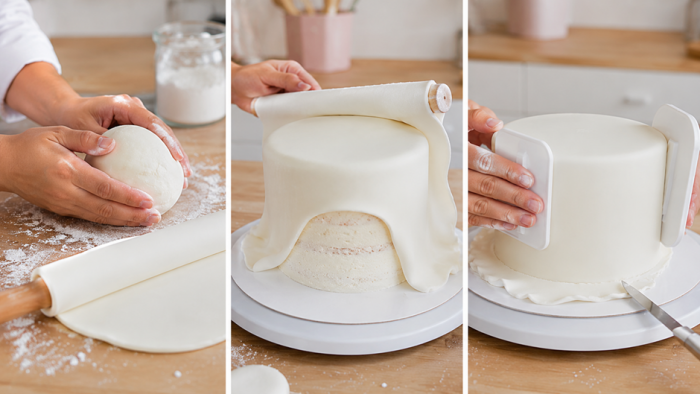
Firstly, you have to knead your fondant. This is something you cannot skip. It cracks if the paste is cold. If it is warm, it will stretch. So, you need to knead it until it feels soft and springy. Then you can roll it out on a lightly dusted surface to around 3 to 4mm thickness.
Next, you need to lift the fondant over your rolling pin and carefully place it over your cake. Start smoothing it out from the top down. As you do this, make sure to get rid of any air bubbles. Use your smoother to apply and even pressure on the sides of the cake to get rid of any wrinkles. When you are done, cut off the excess neatly at the base.
One thing that always works is using two smoothers at the same time on opposite sides of the cake. This way you will get sharper edges, a smooth finish and it will not take you a lot of time.
Adding Colour and Flavour to Your Fondant
White fondant is a blank canvas. For colour, always use gel food colouring, never liquid. Liquid makes the paste sticky and hard to work with. Knead the colour gradually until you get the shade you want.
Just a few drops from a flavourings & extracts range will totally change the flavour. Vanilla, almond, and raspberry are delicious additions.
Want to go further? Sugar flower and modelling paste is perfect for making flowers, figures, and detailed decorations that need to hold their shape.
Common Fondant Mistakes and How to Fix Them
Even experienced bakers hit these. Let’s see what to watch for:
- Cracking: Usually from under-kneading. Warm the paste more before rolling
- Air bubbles: Pin them gently, then smooth straight over the mark
- Elephant skin: The sugarpaste dried out too fast. Work quickly and keep unused paste wrapped
Sliding off: Your base was too dry or too smooth. A lightly tacky crumb coat fixes this every time
Which Fondant Should You Actually Use?
The type of fondant you use makes a real difference. A few worth knowing about:
- Renshaw Ready to Roll Sugarpaste rolls out easily and comes in a wide range of colours, great for all skill levels
- SmartFlex White Velvet Vanilla Sugarpaste has a beautifully soft texture with a hint of vanilla already built in
- The Sugar Paste White Sugarpaste comes in smaller pack sizes, ideal for beginners who want to practice without waste
These three are just a starting point. The world of sugarpaste and ingredients goes much further, with options across brands, finishes, and pack sizes to suit every kind of baker. The same goes for cake decorating supplies, where the right tools and extras can genuinely shape how your finished cake looks and feels.
Working with cake fondant becomes easier the more you practice. Start with good quality fondant, prepare your cake properly, and enjoy the process while learning.
Comments are closed here.