
Stop Guessing and Use These 10 Baking Tips
You spend hours baking, can’t wait to see the beautiful results but things just don’t seem to go right. Cakes may crack, cookies may spread too much, muffins may not rise, pastry may seem too wet and bread may not rise at all.
That doesn’t mean you can’t bake. It is mostly about a couple of simple things that are easy to forget but make a huge difference in the result.
These are some baking tips that always come to mind when you want to learn how to overcome the same mistakes you make 2 or 3 times. Knowing these baking tips will help you solve most of the issues so that you can get the best outcome from your baking activities. These baking tips apply not only to cakes and cookies, but also to breads, croissants, pastries, pies, tarts and muffins.
Before you start, it will be helpful to have your baking supplies ready. Having everything ready will allow you to focus on your baking process and not be searching for materials in the middle of the process.
1. Measure Accurately Always
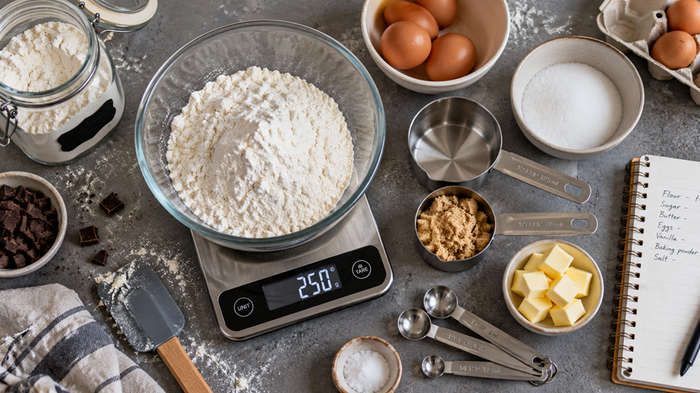
Measuring is one of the simplest baking tips to follow and do very carefully because even a small amount of additional flour or butter can change the texture of your cake, muffin, cookie or homemade bread.
Once you have them, use digital kitchen scales instead of measuring cups. The ingredients might not measure out to the same cup each and every time, but if you weigh them you will be able to ensure that you have the same amount each and every time you bake something.
2. Know Your Baking Soda vs Baking Powder
You’ve probably heard the debate about baking soda vs baking powder for different foods. Even though they both seem to be identical, they behave in a completely different manner. Baking powder works when heated, while baking soda needs an acid, such as vinegar, buttermilk substitute or lemon juice, to start to react with the other ingredients.
So, just in case you confuse and choose the wrong ingredient, then your cakes will be flat. And in case you want to check if the ingredient is still good, then you may simply add a pinch of it to hot water. In case it starts fizzing, then it means it is still good.
3. Don’t Over-Mix Your Batter
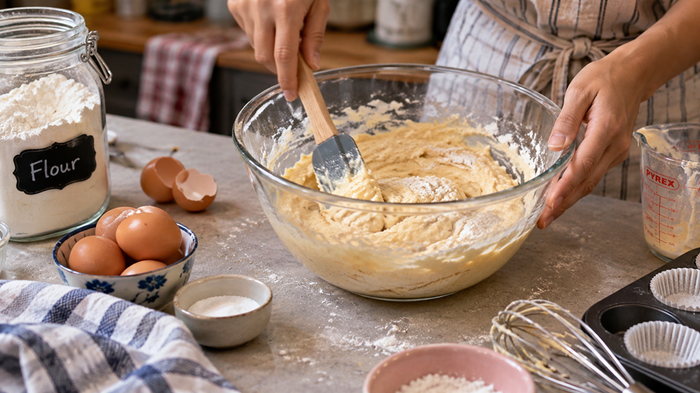
It’s easy to think one more stir will help your batter along. But this is where the problems may begin. Over mixing batter can result in a heavier than desired cake.
As soon as you can see the flour is incorporated into the batter, stop mixing. If you still have a few bits of flour in the batter, don’t worry. They will be folded into the batter. Sometimes it’s more important to know when to stop than to know when to mix.
4. Use Room Temperature Ingredients
Have you ever tried to beat your mixture but found out that it remains lumpy? This might have been caused by your cold ingredients like butter, eggs, and milk.
An hour prior to baking, take out your ingredients from the fridge. But if you happen to forget, put your eggs in warm water and melt your butter in the microwave. You will be surprised at how much this step will help in your cake, muffin, and cinnamon roll baking.
5. Upgrade Your Vanilla

Even if you’re already using vanilla in your recipe, by substituting just one single ingredient, you’ll be able to add some additional taste to your baking. In vanilla bean paste, you can find many vanilla seeds, which can be found within cakes, buttercream, pastries, custard, and desserts and will make everything more homestyle.
Even if you prefer a smooth finish that does not have any specks, you can go for vanilla extract. Both of them are best, but you should try out vanilla bean paste if you want to taste more vanilla in your daily baking.
6. Know Your Buttermilk Substitute
You are all set for baking and realize that the recipe needs buttermilk. Do not panic if you do not have any.
An buttermilk substitute can be made very easily. Add 1 tablespoon of either lemon juice or white vinegar to 240 ml of milk, give it a stir, and wait for 5 minutes. When it curdles just a little, it will be ready for use in the recipe and is ideal for using with baking soda. It will prove very helpful in making pancakes, scones, muffins, and many cake recipes.
7. Get Better Results with Cookies and Traybakes

For those who find that their cookies are spreading too much and are thinner than expected, there are a few cookie baking tips you could use. The first thing is to put the cookie dough in the fridge before baking it since this will slow down the spreading process. The same trick can work for traybakes recipes made with soft dough or thick batter..
Remove the cookies before the centers are completely cooked as they will continue to bake in the heat from the tray. The use of a silicone baking mat also ensures that the cookies bake evenly and avoids browning of the bottoms too quickly. Instead of guessing portions, use a cookie scoop to ensure that the cookies are all even in size.
8. Grease Your Tins Properly
One of the worst things that can happen is when you flip your cake tin, loaf tin, or muffin pan upside down and find out that half of your baked product has stuck to the tin. Even Non-stick tins eventually lose their coating after being used for long periods of time.
Make sure that your tins are well greased before you put in the batter, and if possible line the bottom of the tin with baking paper. In case of shaped tins that have many corners, a cake release spray might be a good idea because it easily gets into areas where butter cannot reach.
9. Test Your Oven Temperature

Oven temperature is another factor that needs to be considered when preparing cakes or cookies because it might be higher than what the dial says. As a result, the outer layer may get baked very quickly while the inner layer remains uncooked.
Using an oven thermometer is a good way of checking whether the temperature is right. One should also take note of their cake tins and baking trays since the type of material used will influence the outcome of the baking process.
10. Chill Before Decorating
Though you may feel eager to start decorating your cake right away after it has been taken out of the oven, it is best to hold back. Having a warm sponge will lead to your buttercream melting, your fondant sticking, and your piping designs melting.
Let your cake cool completely before starting the decoration process. When you use buttercream, it is recommended that you chill your cake for 20 minutes following your crumb coat. Working with a cake smoother and scraper on a cool cake will help you get even sides.
One Habit That Ties All Ten Together
Read the entire recipe before starting. No quick scan. Read the entire thing.
To know beforehand that dough requires two hours of chilling or that the filling should be cooled prior to assembly is the difference between planning for it and having to deal with it halfway through baking.
Baking is made easier when you have good icings and fillings available, measurements are correct, the right baking tin is used, and all ingredients are at room temperature. Apply all these baking tips to all of your baking projects. You will soon see the difference in your cakes, breads, and tarts.
Comments are closed here.